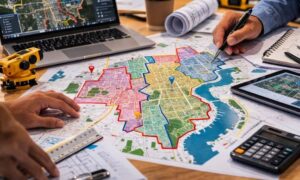
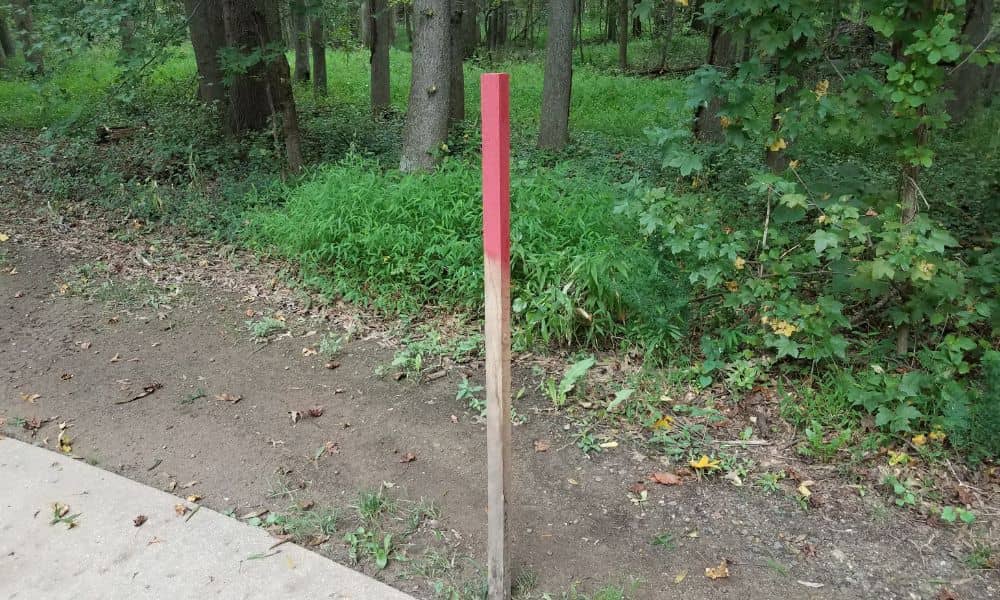
Florida recently strengthened its deed recording rules to reduce property fraud. That sounds like great news — and it is. Stronger safeguards make it harder for someone to file a fake deed or illegally transfer ownership. However, there’s something many property owners don’t realize. Even with these new protections, a recorded deed does not confirm where your property lines sit on the ground. It protects your name on paper. It does not protect your boundaries in real life. That is exactly why a cadastral surveyor matters more now than ever.
Florida’s New Rules Protect Ownership — Not Boundary Lines
Florida updated its recording process to prevent forged deeds and fraudulent transfers. The goal is simple: stop bad actors from stealing property through paperwork tricks.
So yes, these changes strengthen ownership security.
But here’s the important distinction.
Ownership and boundary location are two separate issues.
A deed confirms who owns the property. It does not physically mark the corners of your land. It does not measure the fence line. It does not verify that your driveway sits entirely on your lot.
That work requires field investigation and legal boundary retracement. In other words, it requires a cadastral surveyor.
Why Boundary Problems Often Show Up After a Sale
Interestingly, boundary disputes often surface right after property changes hands. While a previous owner may have ignored small issues for years, a new owner usually asks questions.
For example, someone buys a vacant lot and plans to build. Suddenly, the exact property line becomes critical. Or a homeowner wants to install a new fence. Now the boundary must be accurate.
At that moment, assumptions turn into risks.
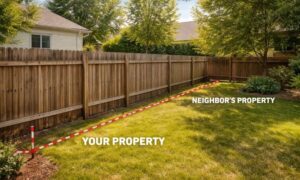
Sometimes an old fence sits several feet off the true line. Other times, a shed crosses into the neighbor’s lot. In older Florida subdivisions, original corner markers may have shifted or disappeared altogether.
Therefore, even though the state protects ownership records more carefully, those protections do not stop neighbor disputes. They simply reduce fraud at the recording level.
A cadastral surveyor addresses the physical boundary — not just the paperwork.
What a Cadastral Surveyor Actually Does
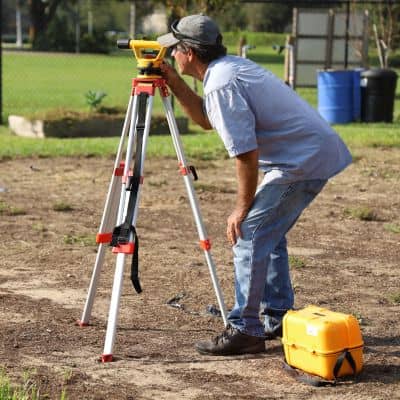
Many people hear the word “surveyor” and think of quick measurements. In reality, cadastral work involves much deeper investigation.
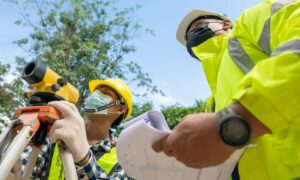
A cadastral surveyor studies deed descriptions, subdivision plats, and historical records. Then they visit the site, search for original monuments, measure distances, and verify corners.
If a legal description references an iron rod at the northeast corner, the surveyor must locate that rod — or determine why it no longer exists. If neighboring deeds overlap, the surveyor analyzes both records to resolve conflicts.
This process blends technical measurement with legal interpretation. It requires experience, accuracy, and careful judgment.
Most importantly, it provides clarity before conflict escalates.
The Hidden Risk of Relying on Online Parcel Maps
Today, many property owners check boundaries through online county maps. These tools help with general planning. However, they do not establish legal boundaries.
In fact, most county websites clearly state that parcel maps serve informational purposes only. Despite that warning, many people zoom in, draw rough measurements, and assume they have certainty.
That assumption can cost thousands of dollars.
Digital lines on a screen do not account for missing monuments, conflicting deeds, or historical survey errors. A cadastral surveyor works in the field, verifies physical evidence, and documents findings in a legally defensible way.
That difference becomes critical when land values rise and development increases.
Real Situations Florida Property Owners Face
Consider a common scenario. Someone inherits land from the family and decides to sell it. Everything looks straightforward until the buyer orders a boundary survey. Suddenly, a corner marker sits missing, and the neighbor claims a portion of the property.
Without a cadastral surveyor resolving the boundary, the closing stalls.
In another case, a homeowner plans an addition near the side yard. The building department asks for proof of setbacks. An old sketch won’t satisfy the permit office. A proper boundary survey becomes necessary.
Even vacant land investors face similar issues. They assume a clean title equals clean boundaries. Unfortunately, that is not always true.
These situations do not involve fraud. They involve uncertainty. And uncertainty often costs more than prevention.
Fraud Protection Is Only the First Layer of Security
Florida’s updated deed fraud rules provide stronger protection against identity-based property theft. That step reduces one type of risk.
However, boundary disputes represent a different kind of problem. They involve physical location, not paperwork authenticity.
If your goal is full protection, you need both ownership security and boundary certainty.
A cadastral surveyor provides that second layer.
Especially in fast-growing areas of Florida, clear boundaries protect homeowners, developers, and investors alike. They prevent encroachments. They support smooth permit approvals. They reduce neighbor conflict. They protect resale value.
In other words, they turn assumptions into verified facts.
When Clarity Matters Most
If you recently purchased property, inherited land, or plan to build near a property line, clarity matters now — not later.
Waiting until a dispute arises often means higher costs, legal stress, and delayed projects. On the other hand, early verification provides peace of mind.
Florida’s new deed recording safeguards make ownership records stronger. That is a positive step forward.
Still, those safeguards do not place monuments in the ground. They do not measure distances between corners. They do not confirm whether that fence truly marks your boundary.
Only a cadastral surveyor can do that.
As property values increase and development continues across Florida, precision becomes more important each year. Fraud prevention protects your name. Boundary verification protects your land.
And that is why a cadastral surveyor matters more after Florida’s new deed fraud rules — not because of fear, but because certainty always beats assumption.