If you own a waterfront property, you might be planning something exciting. Maybe you want to build a dock, repair a seawall, or improve your shoreline. At first, it feels simple. You picture a quick process—get plans done, submit a permit, and start construction. However, many property owners are now running into a frustrating reality. Permits are taking longer than expected. In some cases, projects that once moved smoothly now face weeks or even months of delay. So what’s really going on? The answer often comes down to one key issue: the need for accurate, up-to-date site information. And today, that puts a licensed surveyor at the center of the process—because when that information isn’t clear, delays often come down to why accurate surveys matter for waterfront permits.
Why Waterfront Permits in Tampa Are Taking Longer Right Now
Over the past few years, Tampa has seen a rise in waterfront improvements. More homeowners want to upgrade their properties near the water. As a result, local agencies are handling more permit applications than ever before.
At the same time, review standards have become stricter.
Waterfront projects don’t just affect one property. They can impact water flow, erosion, nearby land, and even neighboring homes. Because of this, agencies now take a closer look at every detail before approving a project.
So instead of moving quickly, many applications go through longer and more careful reviews.
If something is missing or unclear, the process slows down. In many cases, the application gets paused until the issue is fixed—and that’s often where delays start, especially when homeowners are not working with a licensed surveyor early.
Why Waterfront Properties Are More Complex Than They Look
At first glance, your property lines may seem clear. You might even see them on a map or in old documents. Still, waterfront lots work differently.
The edge of your property near the water is not always fixed. Water levels change. Shorelines shift over time. Because of that, older records may not match what actually exists today.
In addition, there are rules that control how close you can build to the water. Some areas include access paths or utility easements that are not obvious at first.
All of this adds layers of complexity.
So while your plan may look correct on paper, it may not match real-world conditions. That gap is one of the biggest reasons permits get delayed.
The Small Details That Can Stall a Permit
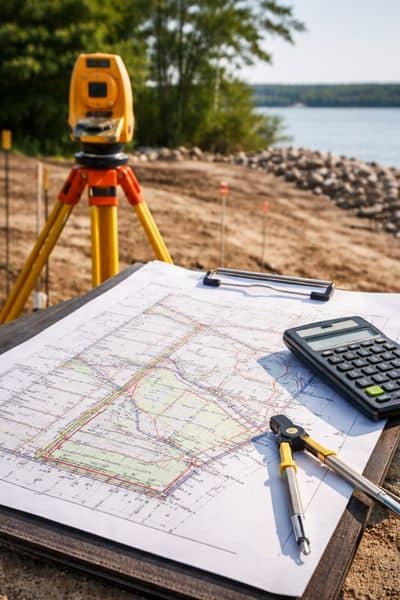
Many delays don’t come from major problems. Instead, they come from small details that get overlooked early on.
For example, some property owners rely on older surveys. Others use online maps or previous drawings. While these can help with planning, they often lack the accuracy required for permitting.
Because of that, issues show up during the review process.
Sometimes the property lines don’t match current conditions. Other times, elevation data is missing or incomplete. In waterfront areas, even a slight difference can matter.
Once the city spots these gaps, the application stops moving. Then the owner must go back, correct the information, and resubmit everything.
Naturally, that adds time and stress to the project.
How a Licensed Surveyor Helps Keep Projects Moving
This is where a licensed surveyor plays a critical role.
Instead of relying on assumptions, a licensed surveyor provides accurate and current data about your property. That includes boundaries, elevations, and key site features that agencies need to review your project.
Because the information is verified and properly documented, it meets local requirements from the start.
As a result, your application has a stronger chance of moving forward without delays.
In many cases, having a licensed surveyor involved early helps prevent problems before they even begin. It gives you a clear understanding of what is possible on your property before you invest time and money into design.
Why Timing Matters More Than Most People Think
Even with the right information, timing still matters.
Many property owners wait until later in the process to involve a surveyor. By then, plans are already drawn and decisions have been made. If something changes, those plans may no longer work.
That leads to revisions, resubmissions, and more waiting.
On the other hand, starting with a licensed surveyor sets a strong foundation. It allows your design to match real conditions from the beginning.
Because of that, you avoid rework and keep your timeline more predictable.
What This Means for Tampa Waterfront Projects
Right now, waterfront projects in Tampa are facing a new reality. The process is more detailed, and the margin for error is smaller.
Whether you are planning a dock, a seawall repair, or any improvement near the water, accuracy matters more than ever.
Small gaps in information can lead to big delays. At the same time, having the right data early can help your project move forward with fewer issues.
That is why more property owners are turning to a licensed surveyor at the start of their project—not as a last step, but as one of the first.
Why Getting It Right Early Makes All the Difference
When you look at the full process, the pattern becomes clear.
Delays often happen when important details are discovered too late. By that point, changes are harder to make, and timelines begin to slip.
However, when you begin with accurate site information, everything else becomes easier. Plans align with real conditions. Applications include the right details. Reviews move more smoothly.
In today’s environment, that early step can make a major difference.
If you are planning a waterfront project, taking the time to work with a licensed surveyor from the beginning can help you avoid delays, reduce stress, and keep your project on track.