If you’ve started calling around for a boundary survey price in Tampa, you may have noticed something that doesn’t quite add up. Two homes that look almost identical can get very different quotes. One comes in reasonably. The other feels higher than expected.
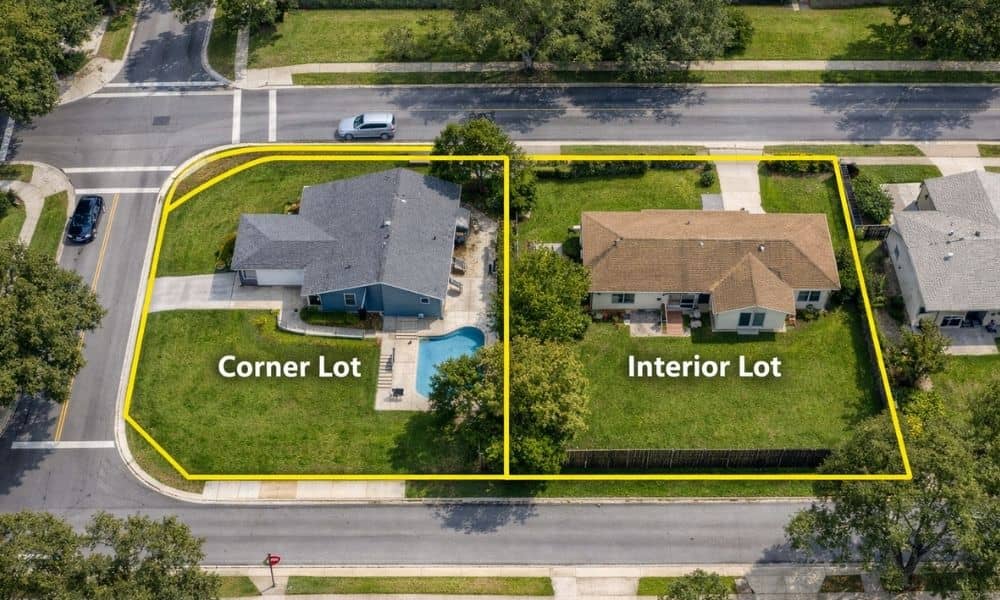
That difference usually has nothing to do with square footage. Instead, it comes down to how your property sits on the street. In Tampa, corner lots and homes with more street frontage almost always require more work. Because of that, they cost more to survey.
Once you understand what’s happening behind the scenes, the pricing stops feeling random.
What a Basic Boundary Survey Price Covers
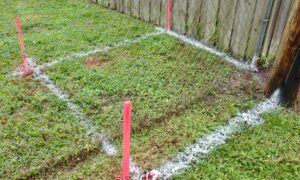
On a simple interior lot, the work stays pretty straightforward. A surveyor locates your property corners, measures the boundary lines, and checks for anything that crosses those lines, like a fence or part of a structure.
In this situation, your property sits between neighbors, with only one side facing the street. That setup keeps things clean and predictable. The surveyor can move efficiently, confirm the points, and complete the job without dealing with outside complications.
Because of that, the boundary survey price tends to stay on the lower end.
However, many properties in Tampa don’t follow this pattern.
Why Corner Lots Change the Scope
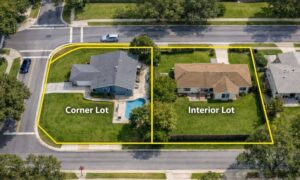
Corner lots look appealing, but they come with extra complexity. Instead of one side facing a street, you now have two. That means more exposure, more boundaries to check, and more room for small errors to cause big problems later.
A surveyor cannot treat a corner lot like a standard property. Each side that touches a street must be measured carefully. Each corner must be verified with more attention. The layout also tends to be less forgiving, especially near intersections.
As a result, the job takes longer. And when more time goes into the work, the boundary survey price increases.
Why More Frontage Means More Work
Frontage simply means how much of your property touches the street. The more frontage you have, the more ground the surveyor needs to cover.
At first, it may not seem like a big deal. However, every additional foot of frontage adds steps. The surveyor must set up equipment, take measurements, and confirm positions across a wider area. They also need to double-check those measurements to avoid mistakes.
Over time, those extra steps add up. So even if your lot size matches your neighbor’s, your survey can still cost more if your property stretches along the street.
When Your Property Connects to Public Space
Here’s where many homeowners get caught off guard.
Your yard does not always end where the pavement begins. There is often a strip of land that sits between your property and the street. This space may include sidewalks, curbs, or small grassy areas.
Even though the city controls that space, your boundary connects directly to it. Because of that, a surveyor may need to tie your property lines into those features.
In Tampa, this comes up often. Many homes sit close to sidewalks or have tight front setbacks. So when work happens near the front of the property, the survey naturally expands.
That extra effort plays a direct role in the boundary survey price.
How Right-of-Way Affects Your Survey
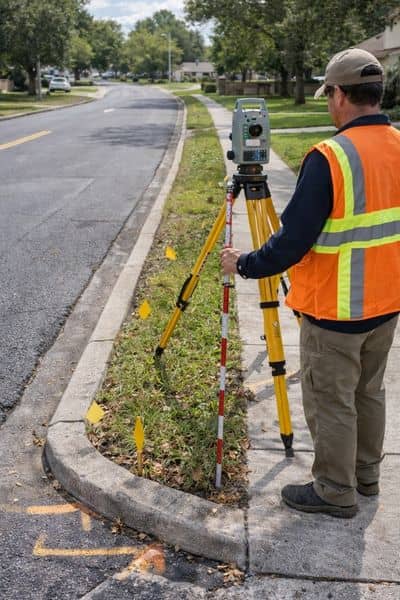
Right-of-way sounds technical, but the idea is simple. It refers to the space near your property that the city uses for roads, sidewalks, and access.
Even though you don’t own it, your boundary meets that area. So when a surveyor works near the front of your lot, they may need to confirm exactly where your property ends and where the city’s control begins.
This process takes more time. It often involves comparing field measurements with public records and visible features on the ground.
So while the term sounds complex, the impact is clear. The closer your project gets to that shared space, the more detailed the survey becomes.
Why Similar Homes Get Different Prices
It’s easy to assume that two homes with the same size lot should cost the same to survey. In reality, that’s rarely the case.
One home may sit quietly between neighbors with minimal street exposure. The other may sit on a corner with two sides facing traffic and public space.
Even though the size matches, the workload does not. One property requires basic verification. The other requires more measurement, more checks, and more care.
That’s why the boundary survey price can vary so much, even within the same neighborhood.
How Small Projects Lead to Bigger Survey Work
Many people only realize this after they start a project.
You might plan something simple, like extending a driveway or placing a fence near the front of your yard. It feels like a small upgrade. However, once the work moves closer to the street, the survey changes.
Now the surveyor may need to include frontage, confirm boundaries near public space, and make sure everything lines up with the existing layout.
What started as a basic request quickly becomes more detailed. And with that added detail comes a higher boundary survey price.
What Helps You Get an Accurate Quote
The easiest way to avoid surprises is to be clear from the start. When you reach out for a quote, share how your property sits and what you plan to do.
Mention if your lot sits on a corner. Explain if your project touches the front of the property. Let the surveyor know if anything connects to the street.
That information helps define the scope early. As a result, the price you receive reflects the actual work required.
Final Thoughts
The boundary survey price in Tampa depends on more than just the size of your lot. It depends on how your property interacts with the street and public space.
Corner lots, longer frontage, and proximity to city-controlled areas all increase the level of detail required. They demand more time, more verification, and more careful work.
So if your quote comes in higher than expected, there’s usually a clear reason behind it.
The more your property connects to the street, the more precise the survey needs to be.