

Submitting a site plan sounds simple at first. You draw the layout, send it in, and wait for approval.
Then the comments come back. Something does not match. A detail is missing. A revision is required.
This happens more than people expect. In many cases, the issue is not the design. It is the site data behind it.
Working with a land survey company early helps catch these issues before submission. That step keeps your plans accurate and helps avoid delays.
Why Early Survey Work Matters for Site Plan Approval
A site plan is only as good as the information behind it. Engineers and designers rely on the right survey details for a site plan when they start placing buildings, driveways, and access points.
If those details are off, even by a little, the layout can shift. A line might be a foot off, something on the site might be missing, or a measurement might not match what’s on record.
Then the comments come in. You revise, you resubmit, and time slips away.
When everything gets checked early, the plan holds together much better from the start.
Matching Records With Real Conditions
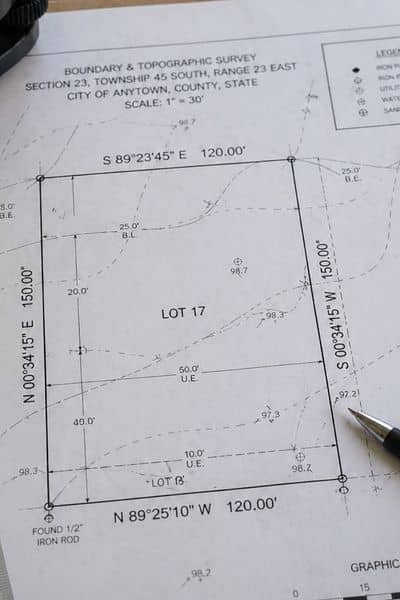
Property records exist for every parcel. They show legal descriptions, dimensions, and past divisions.
However, what is written on paper does not always match what sits on the ground today.
A land survey company compares both to make sure everything lines up before submission.
They check the legal description, then look at the actual site. If something does not line up, they flag it before the plan goes out.
This step avoids confusion during review and keeps your plan consistent with official records.
Defining the Buildable Area
Every property has limits on where you can place structures.
Those limits come from zoning rules, layout restrictions, and how the lot is shaped.
The survey team helps define the usable space.
They map out the area where building makes sense and point out spots that may cause issues later.
This gives designers a clear area to work with and reduces the chance of moving things around after submission.
Checking Access and Frontage
Access matters more than most people think.
Reviewers look at how a property connects to the road. They check where vehicles enter and exit, and they review how the layout lines up with the street.
A land survey company verifies these details.
They confirm the property’s connection to public access and check if the proposed entry points match real conditions on the ground.
If something is off, it gets fixed before submission, not after.
Locating Existing Features on the Site
Every property has physical elements that affect design.
Driveways, pavement, structures, and open areas all play a role.
The survey team documents what is already there.
This keeps the site plan grounded in reality and helps avoid conflicts between the design and existing conditions.
For example, a layout might place a structure where something already exists. That creates a problem during review. Accurate mapping avoids that situation.
Reviewing Utility Conflicts
Utilities take up space, even when they are not obvious.
Lines, connections, and service points can limit where things go.
They look for visible utility features and how they affect the layout.
They also flag areas where space is tight.
This helps the design team adjust early and reduces the risk of changes later in the process.
Understanding Surface Conditions
Not all land is flat or easy to work with.
Some areas slope. Others have uneven ground.
The survey team reviews these surface conditions.
They note areas that may affect placement and help guide how the layout fits the land.
This is not about deep engineering. It is about making sure the design matches the site.
Working With the Design Team
Survey work does not happen in isolation.
It feeds directly into the site plan.
Designers use survey data to place features correctly, and engineers use it to support their plans.
When a land survey company is involved early, everyone works from the same set of facts.
That keeps the project moving and cuts down on back-and-forth changes.
What Happens When Checks Are Skipped
Skipping early checks leads to problems later.
Plans come back with comments. Details do not match. Changes pile up.
Each revision takes time, and each delay affects the schedule.
In some cases, the layout must change more than expected.
That is why early review matters. Fixing issues before submission is faster than fixing them after.
When to Bring in a Land Survey Company
Timing matters more than most people expect.
If you wait until the design is finished, changes get harder and more expensive.
That’s why many projects in Tampa bring in a local land survey company in Tampa early, while plans are still flexible. It helps you see the real conditions on the site before anything gets locked in.
With the right details confirmed upfront, the rest of the process usually moves forward with fewer surprises and less back-and-forth.
Final Thought
A site plan is not just a drawing. It reflects real conditions on the ground.
When those conditions are checked early, the plan stands a better chance of approval.
A land survey company helps make that happen.
They verify the details, support the design, and help keep your project on track from the start.