Tampa continues to grow. New homes appear, businesses expand, and neighborhoods change. Because of that growth, the city must update its district boundaries. These boundaries decide which city council member represents each area. However, drawing those lines does not happen randomly. City planners rely on survey mapping to guide the process. Accurate maps help officials understand how neighborhoods change and where new populations settle.
As a result, planners often work with teams that provide professional survey mapping services, helping them review geographic data and understand how neighborhoods connect across the city.
Why Tampa Needs New District Boundaries
Cities often adjust district boundaries when the population shifts. Tampa follows this practice to keep representation fair. Each district should represent a similar number of residents. Otherwise, some areas could have more influence than others.
Over the past several years, Tampa has seen steady growth. New apartment buildings, housing developments, and commercial spaces have brought thousands of new residents. Because of that growth, some districts now hold far more people than others.
Therefore, the city reviews the district map and adjusts the boundaries when needed.
At first glance, the process may seem simple. Officials move a few lines on a map, and the job ends. In reality, the work involves detailed geographic analysis. This is where survey mapping becomes essential.
What Survey Mapping Really Means

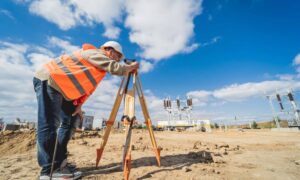
Survey mapping is the process of measuring land and turning that data into accurate maps. Surveyors collect information about locations, distances, elevations, and boundaries. After that, they organize the data into maps that planners and engineers can use.
These maps support many types of decisions. When people start to learn how land surveys support city planning, they often realize how much cities depend on accurate mapping to guide development and organize communities.
For example, survey mapping helps with:
- city planning
- property boundaries
- infrastructure projects
- land development
- zoning reviews
Because of this data, officials can see exactly how land divides across the city. Without clear mapping, planners would rely on rough estimates. That would create confusion and disputes. Accurate maps remove that uncertainty.
How Mapping Helps Redraw District Lines
When Tampa reviews its district boundaries, planners must answer several questions.
First, where do people live today?
Second, how many residents live in each area?
Third, where should district lines move to keep population numbers balanced?
Survey mapping helps answer these questions.
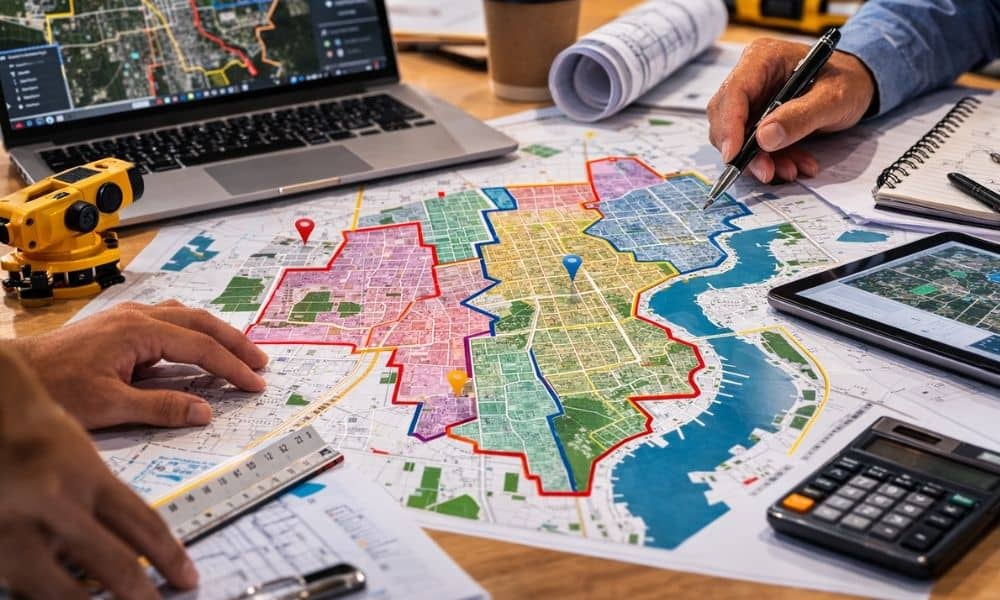
For instance, planners use geographic data to see neighborhood layouts, property lines, roads, and waterways. They combine this information with population data to study how districts currently divide the city.
Next, mapping tools allow planners to test new boundary options. They can move lines slightly and see how the population balance changes.
Because of this process, planners avoid guesswork. Instead, they rely on clear geographic data.
Small Boundary Changes Can Have Big Effects
Even a small line change can affect thousands of residents.
For example, one street might move from one district into another. As a result, everyone living on that street may now have a different city council representative.
That shift can influence several things.
Residents may contact a different office for local issues. Community priorities may change. Local funding decisions may also shift depending on district leadership.
Therefore, the placement of these lines matters.
Survey mapping ensures that these changes follow logical boundaries instead of random guesses.
For example, planners often align districts with:
- major roads
- rivers or canals
- neighborhood borders
- existing planning zones
These features appear clearly in survey maps, which makes the boundaries easier to understand.
Why Accurate Maps Matter for Growing Cities
Tampa continues to expand. As neighborhoods grow, city officials must plan carefully. They must decide where to build roads, utilities, parks, and schools.
Survey mapping helps guide those decisions.
For example, developers use mapping data to study land before construction begins. Engineers review maps to understand terrain and drainage patterns. City planners examine mapping data when reviewing zoning or transportation projects.
Because of this information, cities can grow in an organized way instead of expanding without a plan.
In other words, accurate maps support smarter development.
Survey Mapping Helps Prevent Confusion
Clear maps also prevent disputes.
Imagine two neighborhoods that believe they belong in different districts. Without reliable mapping data, confusion could last for years.
However, survey mapping provides a clear record of boundaries. Planners can point to exact lines and explain how they connect to physical features such as streets or waterways.
This clarity helps residents understand how districts divide the city.
Furthermore, it helps local governments avoid disagreements about representation.
Tampa’s Redistricting Shows the Power of Maps
Most people rarely think about maps. They may glance at one on their phone or see one during the news.
However, maps shape many decisions behind the scenes.
Survey mapping influences how cities organize districts. It helps planners understand neighborhoods. It also supports development, infrastructure planning, and community growth.
In Tampa, the current district review shows how important accurate mapping can be.
Officials cannot simply draw lines without data. Instead, they must rely on geographic information to keep representation balanced.
Because of that process, survey mapping helps Tampa adapt as the city grows.
Final Thoughts
Tampa’s district boundaries may look like simple lines on a map. Yet those lines affect how communities receive representation and resources.
Survey mapping provides the foundation for those decisions. It gives planners the data they need to study neighborhoods, evaluate population shifts, and redraw boundaries responsibly.
As Tampa continues to grow, mapping will remain a key tool for shaping the city’s future.
In the end, accurate maps help cities stay organized, fair, and prepared for change.