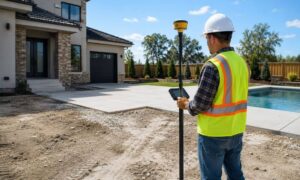
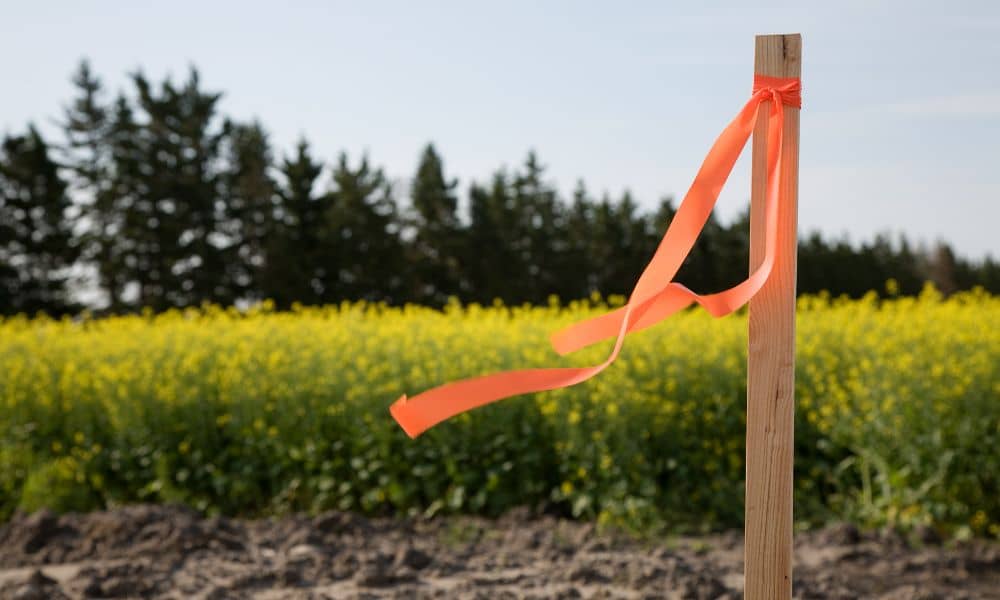
If you’ve ever walked your yard and noticed survey stakes in the ground, you might assume that’s all you need to know about your property lines. But here’s the truth: stakes can move, rot, or even be placed in slightly different spots each time a surveyor visits. That’s why homeowners who want real clarity order a property line survey, a legal document that shows exactly where their land begins and ends. Without it, you’re relying on temporary markers that can lead to costly disputes with neighbors or delays when you plan to build.
When Stakes Don’t Match
Recently on Reddit, a Tampa-area homeowner shared a frustrating story. The same surveyor came out years apart and restaked the property, but the new stakes ended up about three feet different from the original ones. No plat map had been provided—only wooden stakes in the ground. The result? Confusion, arguments over fences and trees, and the sinking feeling that something wasn’t right.
This isn’t unusual. Survey stakes are only part of the picture. They mark where a surveyor believes the line sits at that moment, but they don’t carry the weight of a signed and sealed drawing. Without a recorded plat, there’s no long-term proof of where your property lines really lie.
Why Stakes Alone Aren’t Enough
Stakes are useful in the short term, but they’re not permanent evidence. A mower can knock them over. A storm can wash them away. Even kids playing in the yard might pull them up. Over time, you’re left with nothing to show where your land ends and your neighbor’s begins.
A property survey replaces those fragile markers with a document that lasts. It includes precise bearings, distances, monuments, and notes from the surveyor. That drawing is your proof—recognized by counties, title companies, and courts if questions ever arise. It’s something a stake in the grass can never give you.
Why “Same Surveyor, Different Stakes” Happens
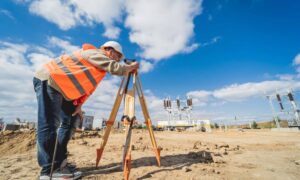
Homeowners often wonder how the same surveyor can mark lines differently on separate visits. The answer lies in evidence. Surveyors don’t just measure—they interpret. They consider deed descriptions, subdivision plats, adjoining surveys, and physical monuments like iron rods or concrete markers. If new evidence is found, the line may shift slightly. Modern tools like GPS can also catch small errors that older methods missed.
In Tampa, where older neighborhoods meet new development, these changes are common. Many subdivisions were laid out decades ago, and over time, trees, fences, and even driveways have crept across supposed lines. A fresh look with today’s technology may not match what was done years ago.
What a Proper Property Line Survey Includes
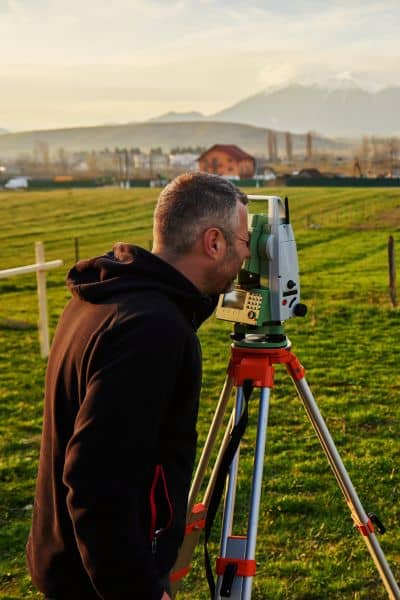
A stake in the ground is only a pointer. A real property line survey gives you much more:
- Bearings and distances for every boundary line.
- Location of found or set monuments, like rebar or concrete corners.
- Visible encroachments, such as a neighbor’s fence or shed crossing the line.
- Notes on easements that may affect how you use your land.
- The surveyor’s seal, date, and certification.
This signed plat is the gold standard. It doesn’t disappear when the grass grows over it. It stays in your records, ready for future sales, building permits, or legal questions.
What to Do If Your Stakes Don’t Match
Imagine walking outside and realizing the new stakes don’t line up with the old ones. What now? First, don’t panic. Document what you see—take photos of the stakes, fences, and any landmarks nearby. Then ask the surveyor for the plat and written notes. You have the right to see the official drawing that explains why the lines were placed where they are.
If a neighbor is involved, keep communication polite. Share copies of your survey, and if they have one, compare. Sometimes both surveyors can meet on-site to resolve the difference. If the issue continues, Tampa homeowners can record a boundary agreement with the Clerk’s office after consulting with an attorney. That way, the decision is official and binding.
Why It Matters
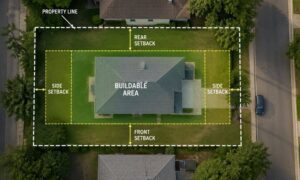
Tampa has unique challenges. Waterfront lots deal with shifting shorelines. Corner lots face setbacks from busy streets. Infill neighborhoods often squeeze homes close together, where even a foot of disputed land makes a difference. And with property values rising, every square foot counts.
Having a property line survey helps you avoid surprises. Want to install a pool, put up a fence, or add a shed? The city may ask for proof of your lines. Selling your home? Title companies want assurance there are no disputes. Even insurance can be affected if a structure crosses a line.
Beyond Disputes: Saving Time and Money
Think about the cost of tearing down a fence built on the wrong side of the line. Or the hassle of moving a shed after a neighbor complains. A survey might seem like an extra expense at first, but compared to legal fees or reconstruction costs, it’s a bargain.
It also speeds up projects. Builders and contractors prefer working with clear boundaries. Permits move faster when you provide official survey documents. Instead of guessing, everyone knows exactly where the work should begin and end.
Clearing Up Common Questions
Is a mortgage survey the same thing?
– Not really. A mortgage or closing survey is usually quick and minimal, designed only for the title company. It doesn’t carry the detail or legal weight of a full property line survey.
Do I need to be home during the survey?
– It helps, but it’s not required. Being present allows you to point out fences, improvements, or concerns, which the surveyor can note.
How long does a property line survey last?
– Forever. The drawing remains valid as a record, though you may want updates if major changes happen around your property.
Final Thoughts
The Reddit homeowner’s story is a lesson for all Tampa residents. Stakes alone won’t protect you from disputes or mistakes. Only a signed, sealed property line survey provides the clarity you need. It’s your permanent proof, your defense in disagreements, and your ticket to smooth projects and sales.
So before you build, sell, or argue over a fence, ask yourself: do I have more than just stakes? If the answer is no, it’s time to order a property line survey. Your land deserves more than guesswork—it deserves certainty.